
Living Bridge
The pursuit of awakening is a fool's errand.

“Hi Shiv,
You don’t seem to view awakening as becoming a better or higher version of ourselves. And unlike many spiritual teachers, you also don’t seem to suggest that what we discover underneath everything is necessarily all-loving, meaningful, or even good.
I personally find that both refreshing and unsettling.
Because if awakening doesn’t take us anywhere “better” and offers no promise of meaning or lasting freedom, then why pursue awakening at all?
Is seeing reality more clearly preferable to not seeing it clearly?”
.
***
.
Preferable to whom?
Preference is a subjective phenomenon. What is preferable to me may not be preferable to you. What is preferable to humans may not be preferable to the planet. What is preferable to a red blood cell may not be preferable to a cancer cell.
Preferable in what sense?
Do you mean ‘what makes us happier’? Do you mean ‘what helps us cope better’? Do you mean ‘what exposes reality to us in all its rawness’?
Seeing more clearly does not guarantee psychological harmony. Exposing reality too much too quickly may not feel liberating. Is it more preferable to be exposed to so much truth that the mind struggles to cope?
Having a sexual awakening at 16 is not the same as having one at 8. When the body has hit puberty, it is developmentally ready for a certain degree of exposure. But the body of a young child is not.
Spiritual awakening is no different. The developmental readiness of a mind to cope with exposure is a key determinant of how the aftermath will unfold.
The kind of mind that is still deeply invested in the search for ‘better’ or some deeper form of meaning or harbors hope in some ‘lasting freedom’ is not developmentally ready for an awakening. If an awakening does occur in such a person’s life, one of two things is likely to happen. Either it will cause them psychological trauma. Or the mind will cope by simply turning the awakening into an egocentric affair resulting in a deeply inflated and delusional state. The spiritual industry is full of such individuals who either turn into chronic devotees desperately attempting to alleviate their trauma by submitting to their gurus - or into gurus themselves, lusting for inordinate and unhealthy amounts of attention from their followers in order to satiate the voracious appetites of their gargantuan egos.
So, is it preferable to see more clearly just to fall into an even deeper delusion?
An infantile spiritual perspective sees freedom as a hall pass from bearing responsibility - for others, for oneself, for nature, for reality as a whole. One who is spiritually mature, on the other hand, does not crave freedom in this way. They are more likely to pause and ask instead: am I ready to face the responsibility such freedom brings?
Seeing clearly, they clearly see that freedom and responsibility are not inversely proportional - they are directly proportional. The stakes go up the more clearly one sees. The margin of error narrows. The cost of suffering goes up. The inner tolerance one has for one’s own hypocrisy shrinks exponentially. Adherence to truth, which was once an idealistic preference, now becomes a survival imperative. Even ‘harmless lies’ that others easily metabolize have disproportionate impacts on both mind and body.
Accompanying this heightened sensitivity to self-delusion and inconsistency between one’s own thought, speech, and action is the added challenge of inhabiting a society that operates largely according to principles of falsehood, hypocrisy, greed, and manipulation. The widening gap between self and society feels untenable at times - and the pressure to either capitulate to society’s mode of operating or to retreat from it altogether is palpable and ever-present. As is the isolation of not being seen or heard as clearly by others as you can see or hear them - including the ones you love the most.
Is this kind of life preferable?
It is not a question of preference. It is a question of readiness.
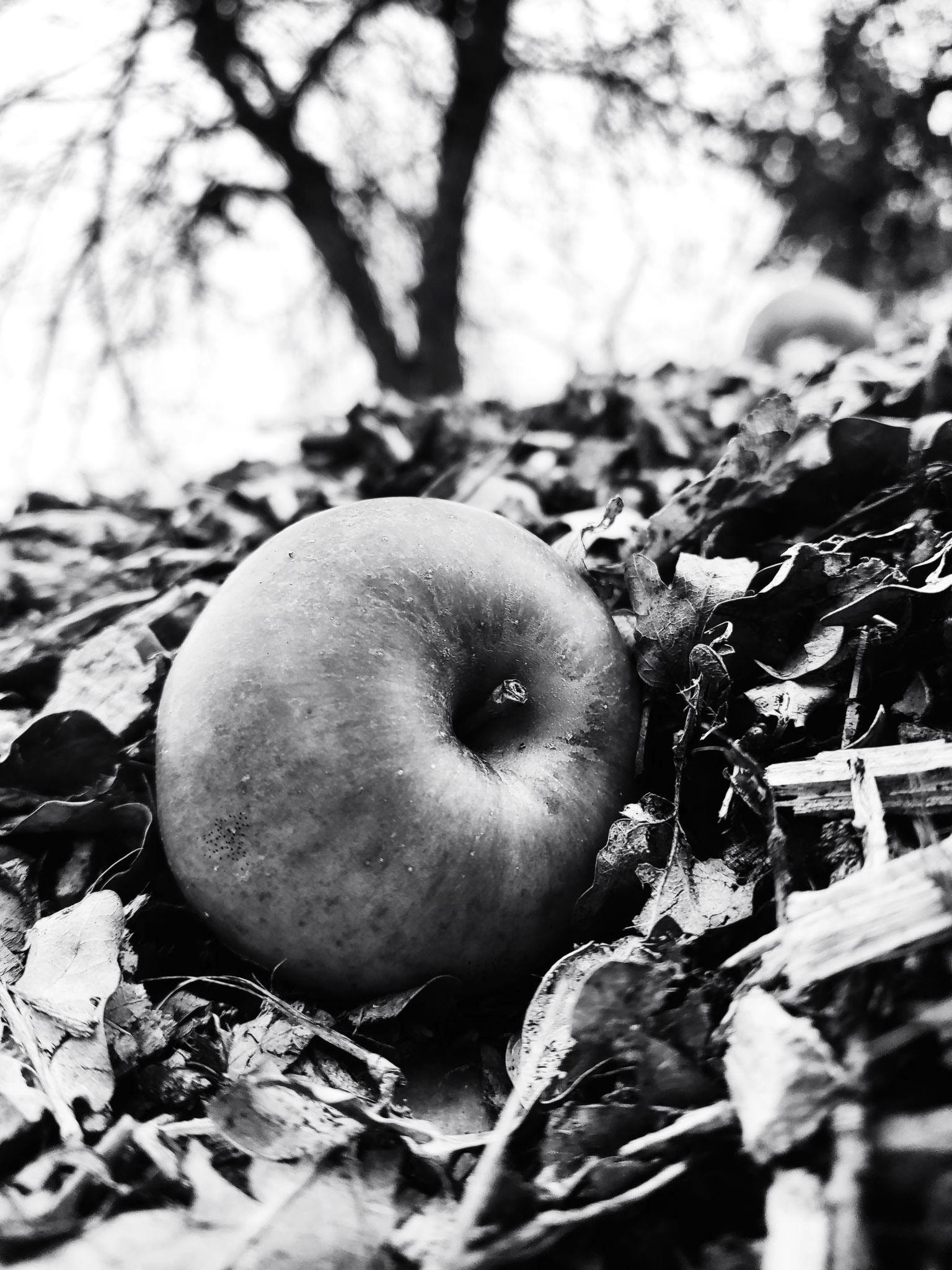
Is it preferable for a fruit to stay on the tree or to fall from it? The question assumes there is an absolute ideal here. When the fruit is still raw, it is more naturally suited to remain on the tree. When the fruit is ripe, it will fall, weighed down by its own juices.
Awakening is not something to be pursued. It is something that naturally arrives when there is a spiritual readiness. That readiness cannot be achieved through spending hours on a meditation cushion, by studying scriptures, or by listening to gurus pontificate for hours on end.
It arrives when your own existence has grown so saturated in its own juices, so weighed down by the hypocrisy of your own beliefs, so disenchanted with any and every framework of meaning-making out there that it organically untethers from the consensus reality.
This is true ‘off-grid’ living. The grid here being the matrix of ideas, meaning, principles, notions of right and wrong, of self and reality - that the rest of society subscribes to. You are unplugging from what powers the consensus reality and plugging into something more raw and fundamental. That energetic core of being itself.
Along with this comes the responsibility of rediscovering meaning, morality, and motivation beyond the formulas of society. For the mind still requires some framework of meaning to operate. The heart still requires some mechanism of morality to express itself. The body still requires some mode of interaction with other bodies and its environment in order to sustain itself.
Just like with off-grid living, where you are no longer dependent on public utilities but must learn to harness the power of nature itself for your energy needs - the awakened life similarly necessitates the capacity to generate meaning, morality, and motivation by connecting with, harnessing, and expressing the energy of being.
This is easier said than done. It requires curiosity, ingenuity, and a willingness to fail repeatedly.
A convict who has escaped prison and finds himself lost in a forest will, after a while, wish to be found and imprisoned. For the oppressive structure of the prison provides more familiarity and comfort than the wilderness of the woods and the prospect of having to survive in it.
Freedom from the matrix does not imply competence to live without it.
This is the part most spiritual teachers rarely talk about - often because few have developed that competence themselves.
When the fruit falls from the tree, it may initially experience it as a kind of liberation - but really it is a beginning. The beginning of its own solitary journey. A journey that may lead to it being picked up by an animal and eaten - and its seed dropped in some faraway country. And that seed will need to learn to take root in the soil of that land. And if the weather conditions are too harsh, it will not have the shade of a tree to shelter it, the strength of a branch to support it, or the company of other fruits to encourage it. It must create new roots of its own that go directly into the Earth - for the first time building a direct bond between it and the whole. The deeper its roots grow, the more it can venture upwards - germinating in the right conditions to create a new life form of its own.
Awakening is not an end - it is a beginning. It is dying to an idea of life and self and becoming born into life itself. As life itself.
Suffering does not cease. It changes form. The narratives that once dominated experience - the ideas of who we were becoming, of what made us happy, of what we wanted out of life, of what better and improved versions of ourselves and our lives we were moving towards - and the suffering that followed when those expectations were not fulfilled, hold little significance any longer.
That protagonist we thought we were is no longer believable and nor is the arc of their story all that compelling.
Instead, a new kind of challenge faces us. Living out the reality of a mind that still functions on meaning, a heart that still functions on emotion and relationship, and a body that still functions on survival and interaction - while inhabiting a social reality that is still narratively structured through and through. Suffering now emerges in the form of the structural incompatibilities that living these contradictions creates.
One’s meaning is no longer dependent on narrative, yet it must also be comprehensible to others who operate purely through a narrative lens. One’s morality is no longer binary, but it must be relatable to a world that mostly adopts a binary lens. One’s motivation is no longer structured via some ideal of betterment, and yet it must be translatable for those who cling to life as a movement from worse to better.
This responsibility of interfacing the new awareness that awakening brings with the old mind that the world largely inhabits falls squarely on the shoulders of those who have awakened. Bearing this responsibility without succumbing to frustration and withdrawing from the world or pandering to the world by turning awakening into some benign fairytale narrative that comforts more than clarifies - requires deep reserves of restraint and courage. A courage that builds exactly the kind of integrity that such a life demands.
The awakened person acts as a living bridge between formless and form. Between the absolute and the relative. Between the sacred and the mundane. And it is through their lived example that these dualities are resolved.
Is it preferable to live one’s life as a solitary bridge suspended over a gaping chasm between two worlds?
How you answer that might be more of an indication of your readiness to inhabit just such a reality than your preference to do so.
This a powerful piece. Awakening is not something to be pursued for the sake of self-improvement. A Glimpse is an invitation to a pursuit of Truth...one that when taken seriously, cannot be denied. But it requires the relinquishing of the goals and aspirations of an individual-finite-self and the becoming of something more. To Know Truth requires relinquishing the identity, and subsequently all attachments to self-improvement, as living in the present moment without attachments is Truth. One who lives in this manner may seem to not suffer because they are not concerned with the 'normal narratives'. They do deeply feel the joys and pains of life in the moment, but they then move on to the next moment, without ongoing suffering following. To an individual looking from the outside, this may seem like a wonderful path to 'improvement' for the individual-self...but the seeker must recognize the core requirement...for the individual-self to dissolve. Most are not ready for that, and if not, the activity is a bypassing of Truth. Awakening cannot be forced...the aspirant must have the requisite juice to fall from the tree, and then be ready to accept and live in that new paradigm. Excellent discussion and pointing!
Many years ago, my son—just hitting puberty—bought me a painting on a square canvas for Christmas. (My mother chipped in with the money.) It was made by a young local street artist and depicts a simple figure.
With a sensitive stroke of black paint, there is the contour of a head and upper body, with no arms, and on the “face,” two rounded shapes representing eyes. The figure looks young, naive, and somehow melancholic.
And in large capital letters, dipped in a soft pink color, it reads:
NO ONE LEFT TO BLAME
For 20 years, it has been hanging on the wall next to my fireplace, where I sit and sip my coffee and light my cigarette—a morning ritual often riding on the back of shame and guilt for not having the strength to kick the habit.
And once in a blue moon, I align with the words, and in the core of my being, everything comes alive.
The FREEDOM of knowing:
There is NO ONE LEFT TO BLAME.
And freedom lasts until it crumbles.
Fuck the weight of responsibility.
Let me sleep.