
Open-ended Enlightenment
The subtle traps that arise once identification with the separate self is seen through - and how to move beyond them

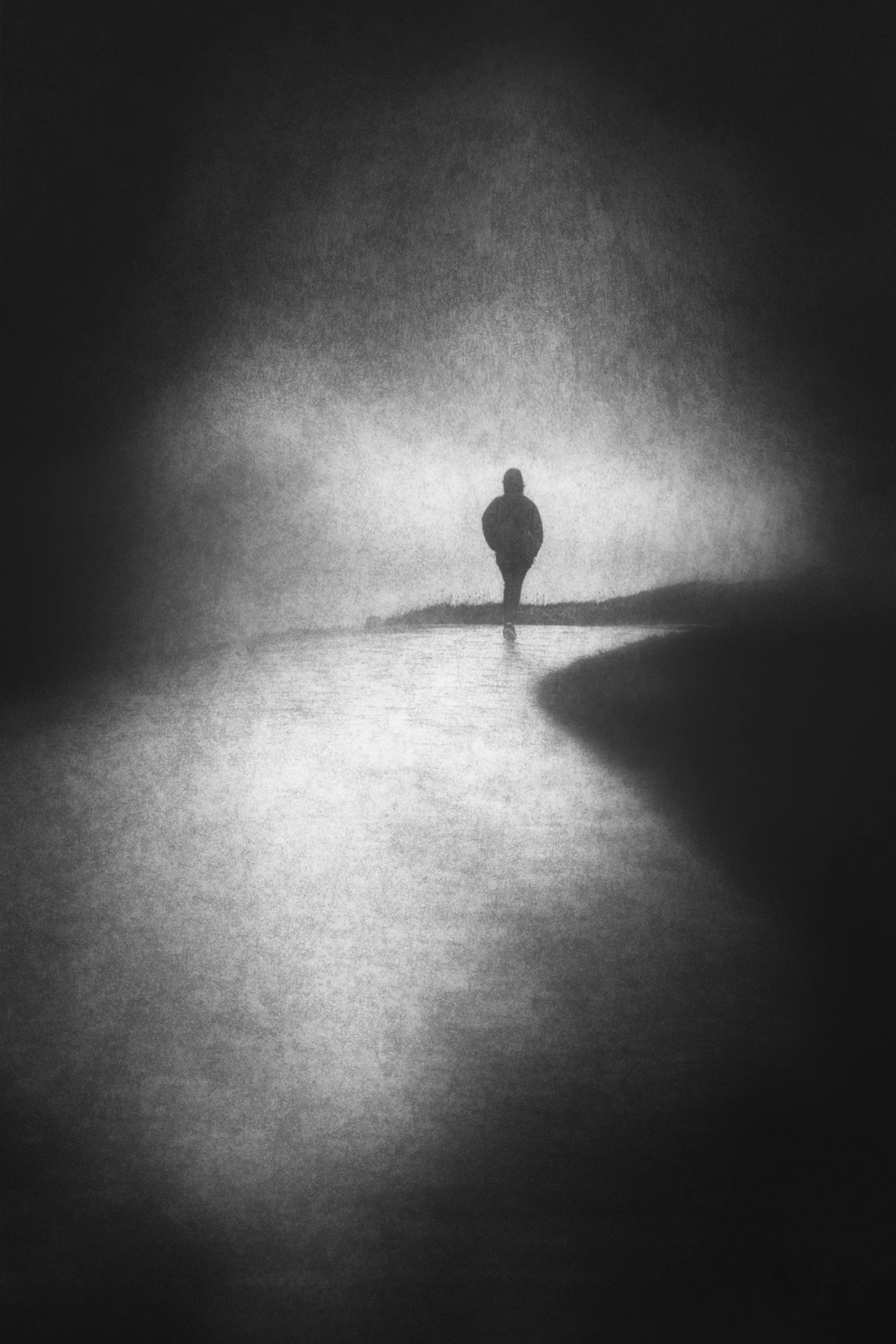
“Hi Shiv, I often find myself circling through the same old emotional patterns, even after years of spiritual work. Fear, anger, insecurity and doubt still show up, sometimes just as strong as before. I don’t react as much as I used to, but it’s frustrating that these things haven’t disappeared. Part of me feels like I should be past all this by now. Am I missing something, or is this what the path is supposed to look like?”
.
***
.
Let me clear a common misunderstanding with one simple statement:
You cannot deviate from the path.
I want you to look at this statement carefully.
Read it a few times.
Contemplate it deeply.
What do I mean by that statement?
Do I mean…
…you are free to act however you want without any concern for consequences?
…it doesn’t matter what you do because it’s all meaningless anyway?
…there is no need to act ethically since everything you do is ‘right’ by default?
…you are incapable of error?
If you answered ‘yes’ to any of these questions - you are incorrect. That’s not what I mean.
And if you answered ‘no’ - then the question still remains - what do I mean when I say - “You cannot deviate from the path?”
It means the path is not what you think it is.
Giver of Life
The path is not a series of choices that lead to certain outcomes.
The path is not a sequence of steps that lead to some final destination.
The path is not an accumulation of events that generate a pattern of meaning.
The path is not a succession of experiences that build a trajectory of evolution.
These are the many ways in which we learn to interpret the path through the lenses of language and culture. They are the means by which we order our experiences into coherent and digestible narratives. They are the tools using which we cultivate a sense of progress and growth.
Yet, the map is not the territory. And our interpretations of the path are not the path.
You cannot deviate from the path.
To grasp what this means we need to look deeper. Beneath the surface of what-is-happening. Beyond the content by which we are perpetually orienting our lives - to the very context within which it occurs.
To the unconditional container of all experiences - good and bad, just and unjust, peaceful and traumatic, joyful and fearful.
I am inviting you to peek behind the veil of what-happens to the luminous space within which it happens.
Being. Presence. This here-and-now.
As words, these appear inert. Yet, they point to the same profound, powerful and inexhaustible source.
That which brings this all to life.
A context beyond all our notions of ‘you’, ‘me’ and ‘a world’. For you and I are forms of content. As is the world and everything within it.
And, as content, we generate more content. Thoughts, feelings, emotions, opinions, biases, beliefs, prejudices, identities. And that content generates even more content - the written word, the spoken word, actions, attitudes, behaviours. And from there further content is triggered: reactions, consequences, rewards, punishments.
But where is all this content emerging from in any given moment?
What is animating it?
What is bringing it to life?
It is that same eternal unchanging context to all experiences - being. The isness of whatever is happening.
That is the path.
I want you to imagine a river flowing swiftly down a mountainside. The river may contain beautiful fish or harmful pathogens. It may carry colorful autumn leaves along its current or dangerous debris. It may support an entire ecosystem or it may consume it. The river may transport you and it can also drown you.
What happens in the river - good and bad - depends on the river, but does not alter its fundamental nature: which is to flow.
The path of your life is like that river.
Asking what that path is supposed to look like is like asking ‘how the river is supposed to flow?’.
Gauging the rightness of your path based upon the experiences you are having is like judging the rightness of the river based on the kinds of debris floating within it?
Is the river mistaken if the carcass of a dead otter were to float by in it?
Is the river wrong if it drowns or floods?
These are absurd questions. The river is a force of nature.
Similarly, being is the life-force. The giver of life.
It is prior to the content that arises within it and animates it.
Clinging to the Path
Those who imagine the path to be built out of the content of their experiences have no choice but to cling to that path by attempting to control their experiences. They elevate positive, peaceful, orderly, harmonious experiences while devaluing negative, conflicting, chaotic and disturbing ones. Clinging takes the form of “rightness” - where rightness is the ability to maximize outcomes of the former category, while mitigating outcomes of the latter. (This is where your own personal query strikes me as coming from.)
However, even when one has grasped the deeper truth I am pointing to - that the path is not based upon the contents of experience but is rather the space within which it occurs - clinging can still happen. And often does.
This clinging takes the form of “emptiness” - where emptiness is an unyielding attitude of non-identification and non-involvement with content. Because we see being as the primary source and the life-force, we become disenchanted by becoming. We lose interest in the creative flow of content and instead become fixated upon the context in a way that gradually, almost imperceptibly, drains vitality.
Imagine fertile soil in which no seeds are planted. Over time, no matter how rich that soil is - it will turn arid. The soil is the giver of life, yet it is also in turn enriched by the lifeforms that grow within it. Birth, death, growth, decay, strength, suffering, blooming and withering - all these experiences are turned into nutrients of further enrichment.
And so the great paradox that: while becoming is dependent upon being, being is also enriched by the endless stream of becoming.
The context gives rise to content and is in turn enhanced by it.
Every kind of content is useful. Not an ounce of energy is wasted. Joyful experiences are converted into spiritual nutrients, but so are painful ones. Experiences of compassion and altruism are converted into spiritual nutrients, but so are experiences of cruelty and selfishness.
And so, clinging to being becomes self-defeating. It becomes antithetical to being itself.
For being, this life-force - much like a dynamo - eternally replenishes itself through perpetual flow, movement, incessant becoming.
Yet, even this understanding - that being and becoming enrich one another - does not free us from clinging. It only moves the fixation to a still subtler level.
The Last Trap
You will cling to the image you hold of yourself. You have no choice.
If you take yourself to be a separate individual, you will cling to polar experiences - to being right, safe, or seen.
If you take yourself to be pure being, you will cling to stillness - to that presence beneath all forms.
Yet, even when you awaken beyond both - into awareness itself, observing both being and becoming from a lucid distance - clinging still occurs, only subtler.
You will cling to that pristine clarity of lucid awareness. What, in Zen, is known as the last trap.
Imagine an actor on a stage playing a character while an audience watches. The actor can play the role of the character without being captured by the character’s worldview. He can become the character, feel their thoughts, identify with their perspectives, express the righteousness of their ethical beliefs - and at the same time exist beyond them. Meanwhile, the audience can watch the drama with curiosity knowing the actor to be playing a role, and the story to be a fiction, yet thoroughly enjoying the ‘reality’ of it.
Yet, if the actor were to forget he were playing a role - he would cling to his identity as a character - and become stuck in it.
On the other hand, if he clung desperately to his own identity as an actor (for fear that he would ‘lose himself’ in the character) - he would become unable to embody the character - for it would feel “fake” or “false” to him.
Finally, if the audience were to cling to its own position as an uninvolved witness of both the actor and the character - for fear of becoming absorbed in the unfolding drama - it would lose its curiosity in the play.
Being is the actor. The separate self is the character. Awareness is the audience - in the grand production that is your life.
They are the interlacing layers of what you are. Yet, they cannot fully encompass what you are. For that which you are exists beyond comprehension. Beyond the conceptualization of the separate individual, beyond the felt presence of being, beyond even the perception of awareness.
What is ‘that’?
Don’t define it. Leave it open-ended.
For the moment you define it, it becomes yet another category of experience - another form of clinging.
The last trap is an infinite loop.
To step out of it, you must be willing to live as a question rather than an answer.
For enlightenment is open-ended.
It is perpetual flow - not because flow is superior…
…but because there is the unshakeable recognition that there is nowhere left to rest.
Life is ceaseless movement between seeing, being and becoming.
Dear Shiv,
Beautiful piece. I love this a lot: "To step out of it, you must be willing to live as a question rather than an answer."
Thank you for sharing!
Love
Myq?
This and that. A beautiful dance.